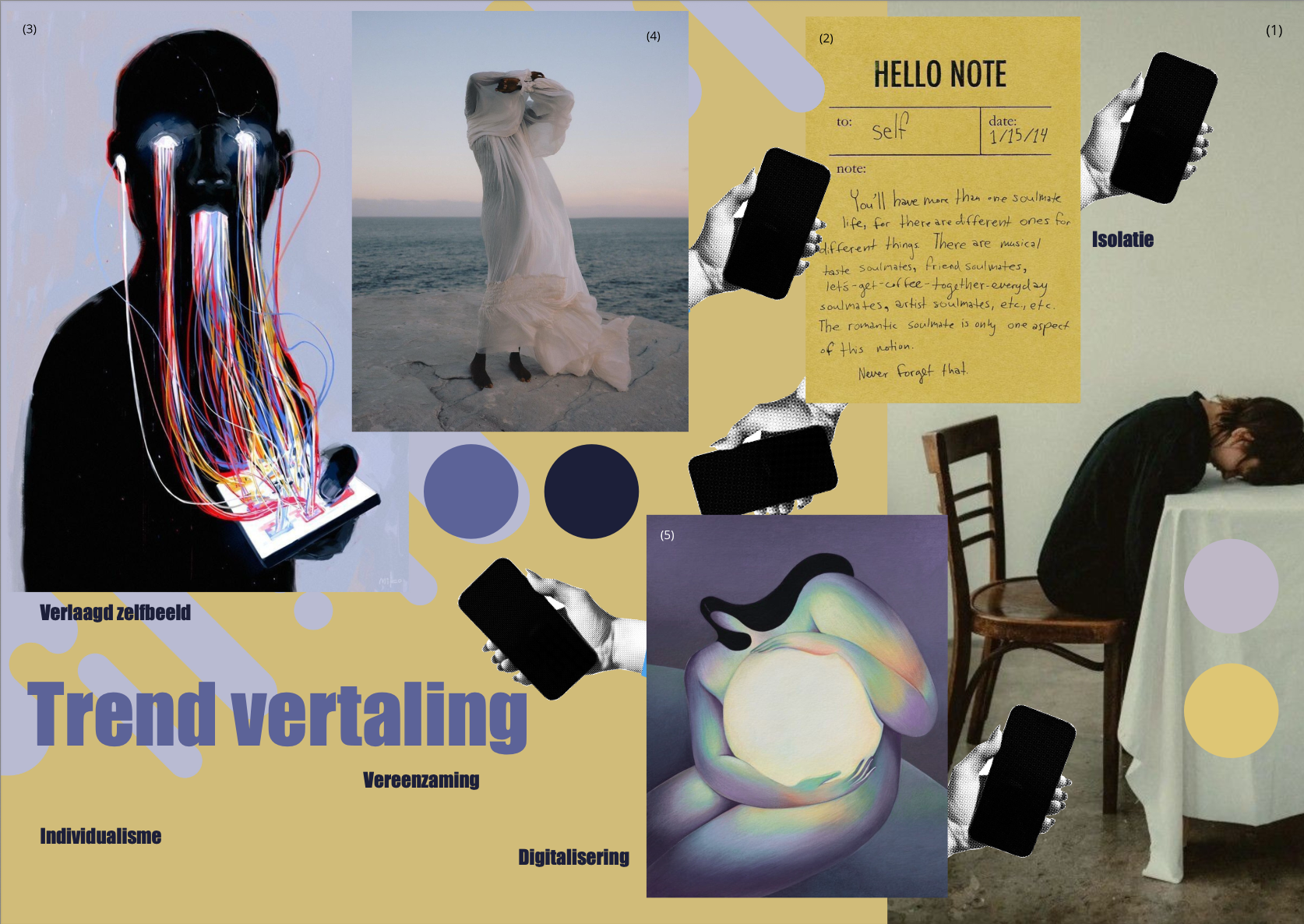
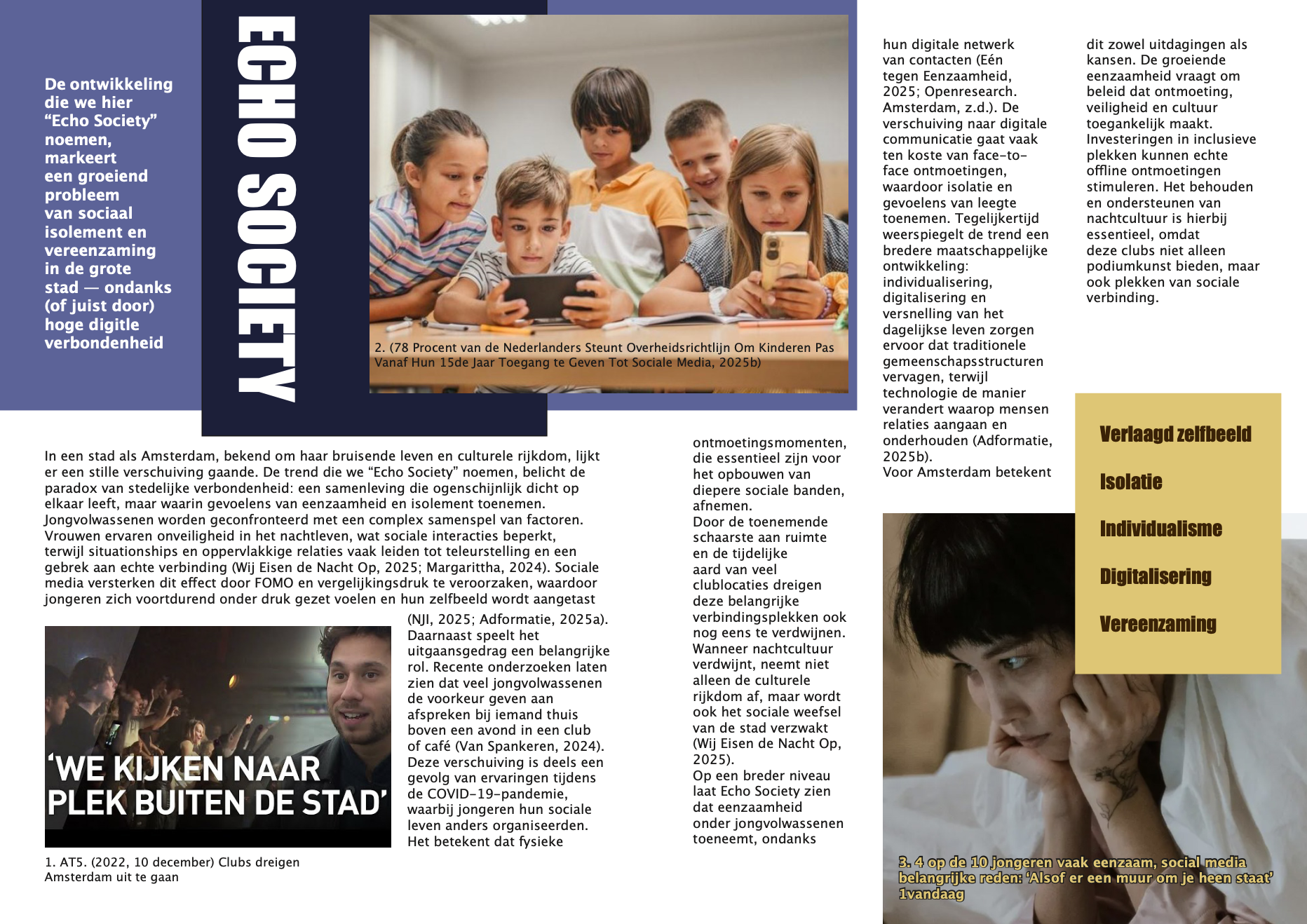
The development we call Echo Society highlights a growing problem of social isolation and loneliness in large cities, despite — or partly because of — high levels of digital connectivity. In a city like Amsterdam, known for its vibrant culture and social energy, people may live physically close to one another while feeling increasingly disconnected.
Young adults are especially affected by this shift. Social media can create FOMO, comparison pressure and lower self-esteem, while situationships and superficial relationships may contribute to feelings of emptiness and a lack of meaningful connection. At the same time, concerns about safety in nightlife can limit opportunities for spontaneous social interaction.
Another important signal is the changing way people socialise. Many young adults increasingly prefer meeting at home rather than going to clubs or cafés. This behaviour, partly shaped by the COVID-19 period, reduces the number of public spaces where deeper social connections can naturally develop. At the same time, Amsterdam’s nightlife is under pressure due to limited space and the temporary nature of many club locations.
On a broader level, Echo Society reflects major societal shifts such as individualisation, digitalisation and the acceleration of everyday life. Digital communication increasingly replaces face-to-face interaction, while traditional community structures become weaker. People may have large online networks, yet still experience loneliness in their daily lives.
For Amsterdam, this creates both a challenge and an opportunity. Investing in inclusive public spaces, accessible cultural experiences and a strong nightlife can encourage meaningful offline encounters. Protecting these spaces is not only important for the city’s cultural identity, but also for its social fabric.
Echo Society reveals a modern paradox: the more connected we become online, the harder real connection can sometimes feel.