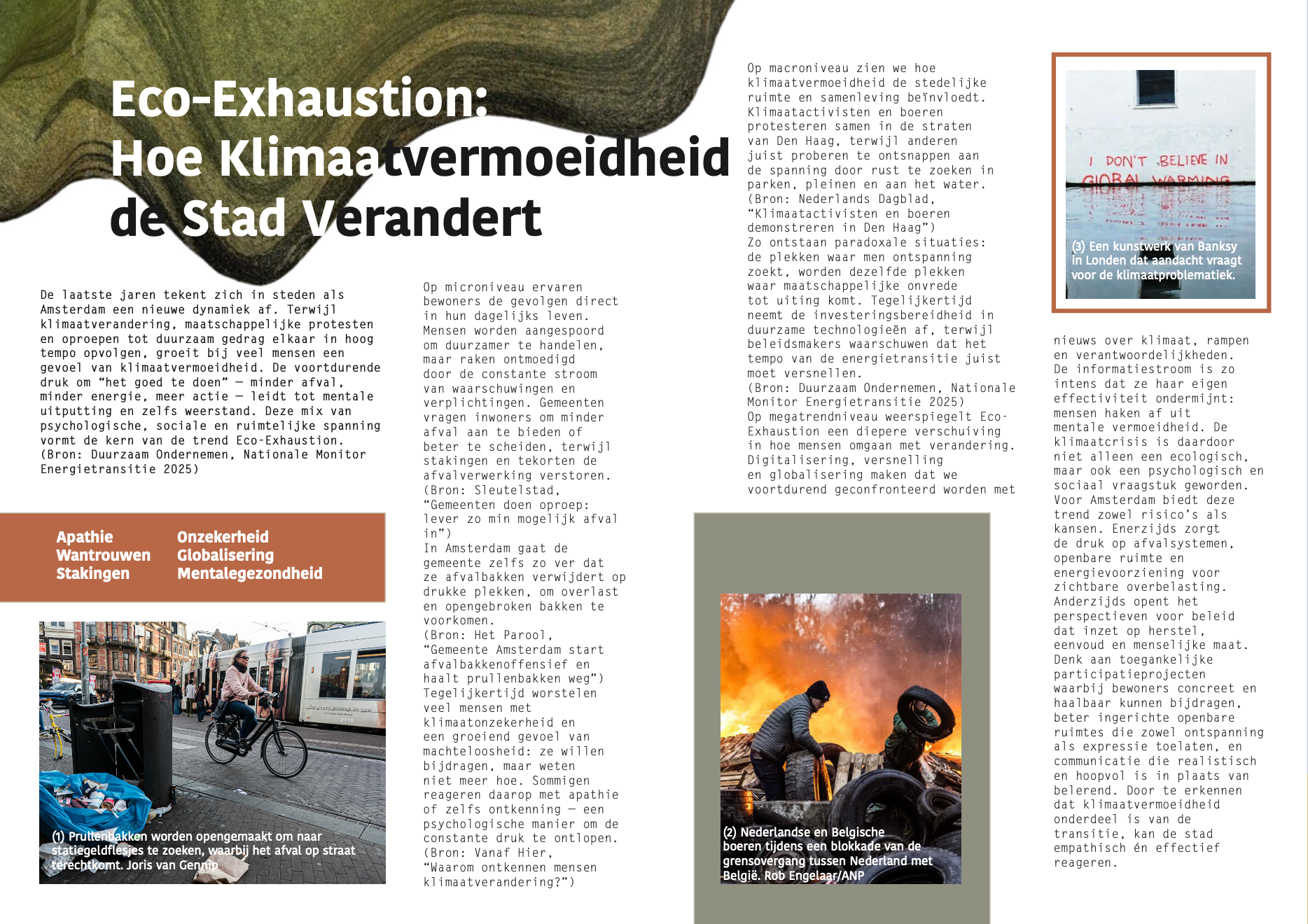
In recent years, a new dynamic has emerged in cities such as Amsterdam. As climate change, public protests and calls for sustainable behaviour continue to intensify, many people are experiencing climate fatigue. The constant pressure to “do the right thing” — produce less waste, use less energy and take more action — can lead to mental exhaustion, frustration and even resistance. This combination of psychological, social and urban pressure forms the basis of the trend Eco-Exhaustion.
On a micro level, people experience this directly in everyday life. Residents are constantly encouraged to make more sustainable choices, while strikes, waste problems and changing regulations make those choices feel increasingly complicated. In Amsterdam, public bins have even been removed from busy areas to reduce problems caused by opened rubbish bags and bottles being collected for deposits. At the same time, many people struggle with climate anxiety and a growing feeling of powerlessness. They want to contribute, but no longer know what is effective.
On a macro level, Eco-Exhaustion becomes visible in the city itself. Public spaces function both as places for relaxation and as locations for protest and social tension. Climate activists, farmers and other groups use urban spaces to express dissatisfaction, while others seek those same parks, squares and waterfronts to escape from constant pressure.
On a megatrend level, Eco-Exhaustion reflects a broader shift caused by digitalisation, acceleration and information overload. People are continuously exposed to news about climate disasters, responsibilities and urgent transitions. When this stream becomes too intense, it can lose its impact and instead create disengagement.
For Amsterdam, this trend creates both risks and opportunities. The city can respond by making sustainability feel more achievable, human and hopeful. Clear communication, accessible participation and public spaces designed for both recovery and expression can help reduce the feeling of overload. Recognising climate fatigue as part of the transition could make sustainable change more empathetic and ultimately more effective.
Eco-Exhaustion shows that the climate crisis is not only environmental, but psychological and social as well.