‘The Fanfluence effect’
Tourism is entering a new dynamic. Fan-driven trends, or “fanfluence,” are changing how people travel and how cities experience their visitors. What once started within small groups of passionate fans has developed into a global force that can shape entire destinations.
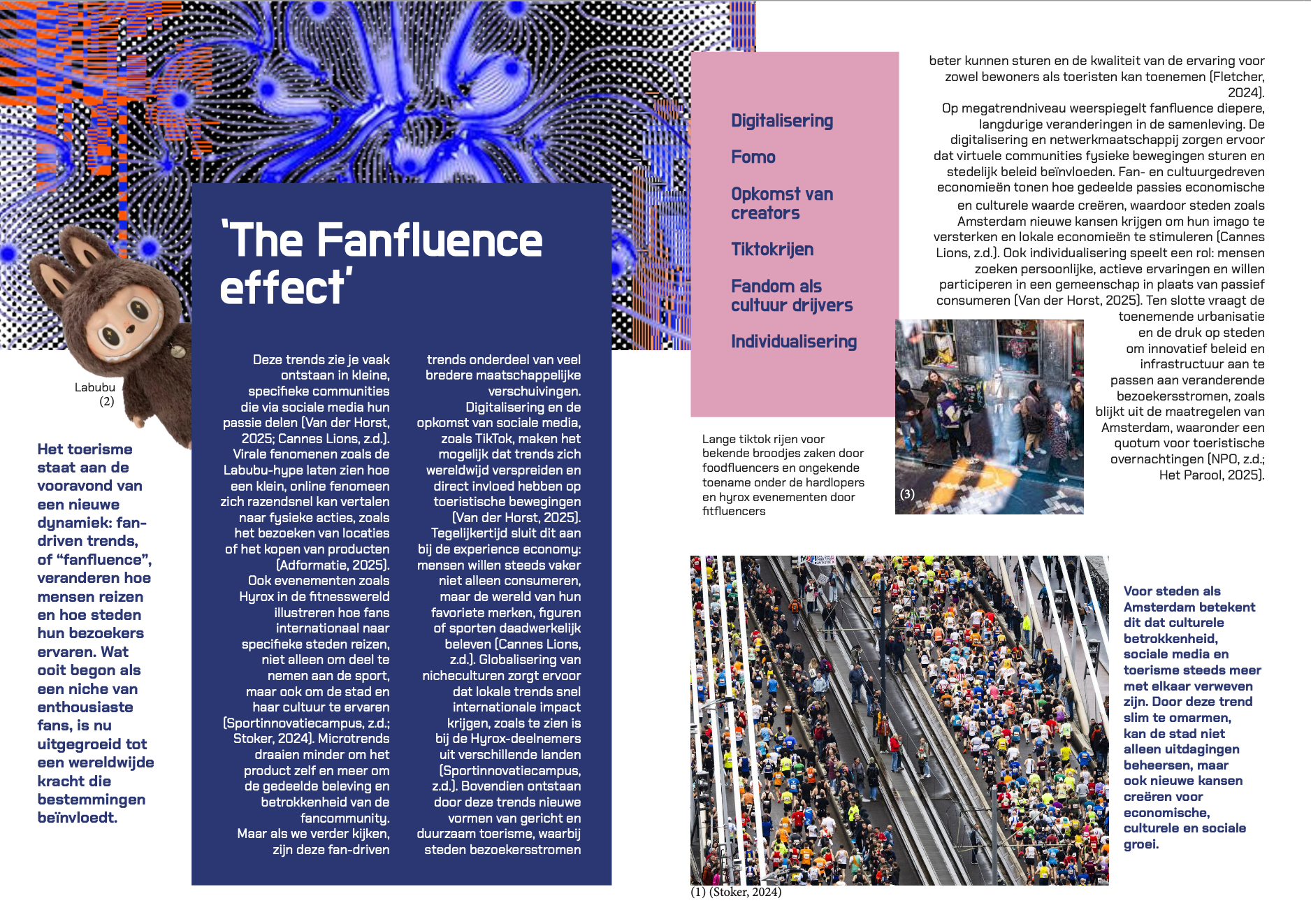
These trends often begin in niche online communities where people share their interests through social media. Viral phenomena such as the Labubu hype show how a small online trend can quickly lead to physical behaviour, from visiting specific locations to buying certain products. The same can be seen in food tourism, where TikTok and food influencers create long queues for viral sandwich shops and cafés.
Sports and fitness trends show a similar pattern. Events such as Hyrox attract participants from different countries who travel not only for the competition, but also to experience the host city and its culture. The rapid growth of running communities and fitness events demonstrates how influencers and online communities can create entirely new travel motivations.
Fanfluence is connected to wider societal developments such as digitalisation, globalisation and the experience economy. People increasingly want to do more than simply consume a product or follow a brand. They want to enter its world, experience it themselves and share that experience with a community. Social platforms such as TikTok allow niche cultures to spread internationally within a very short period of time.
On a larger scale, fanfluence reflects the growing influence of digital communities on physical cities. Shared passions generate economic and cultural value, while individualisation encourages people to search for personal and participatory experiences rather than passive tourism. At the same time, growing visitor numbers place additional pressure on urban areas, making it increasingly important for cities to manage tourism flows carefully.
For cities such as Amsterdam, culture, social media and tourism are therefore becoming increasingly interconnected. By responding strategically to fan-driven travel, cities can better manage visitor flows while creating new opportunities for economic, cultural and social growth.
Fanfluence turns online passion into real-world movement.