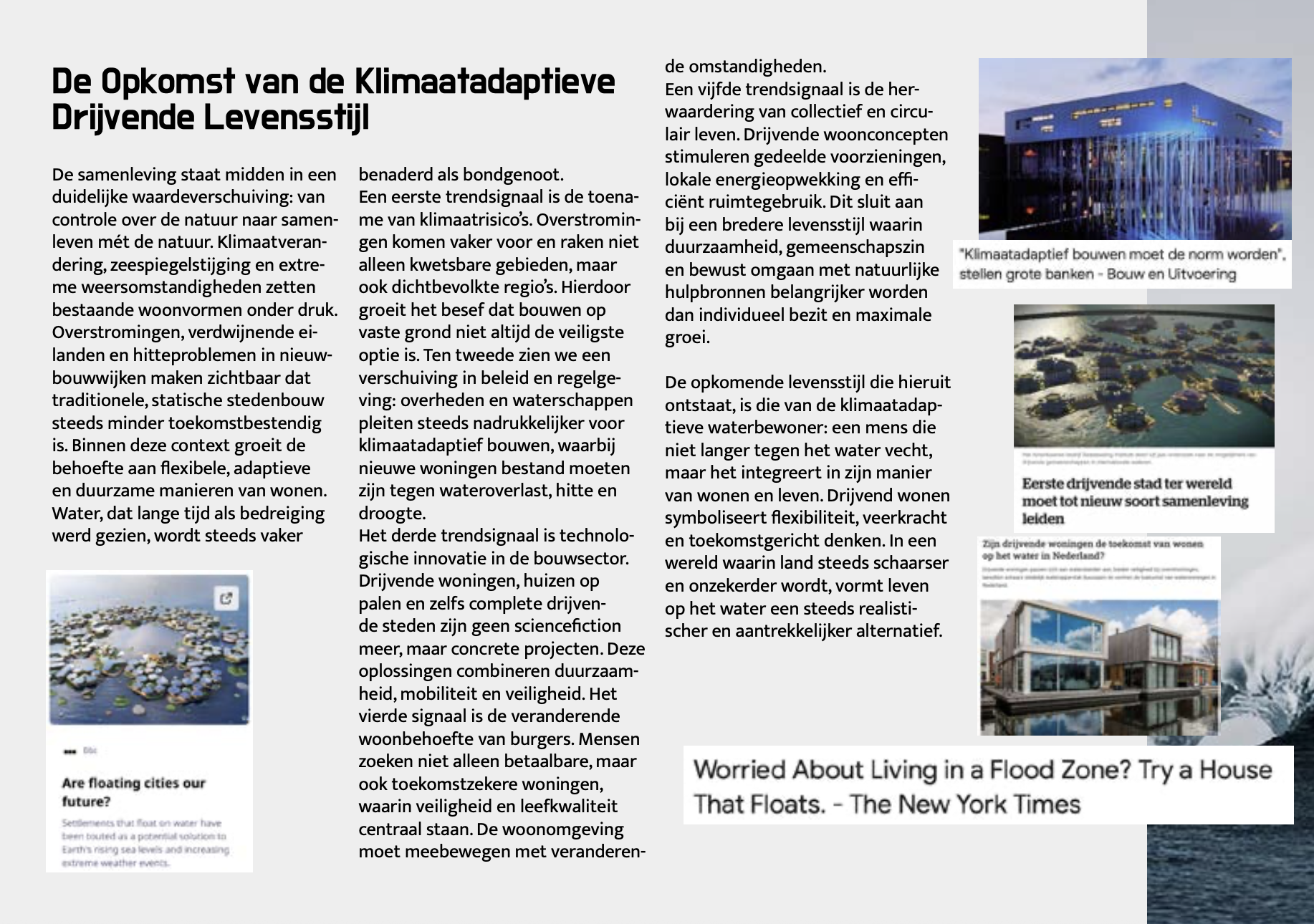
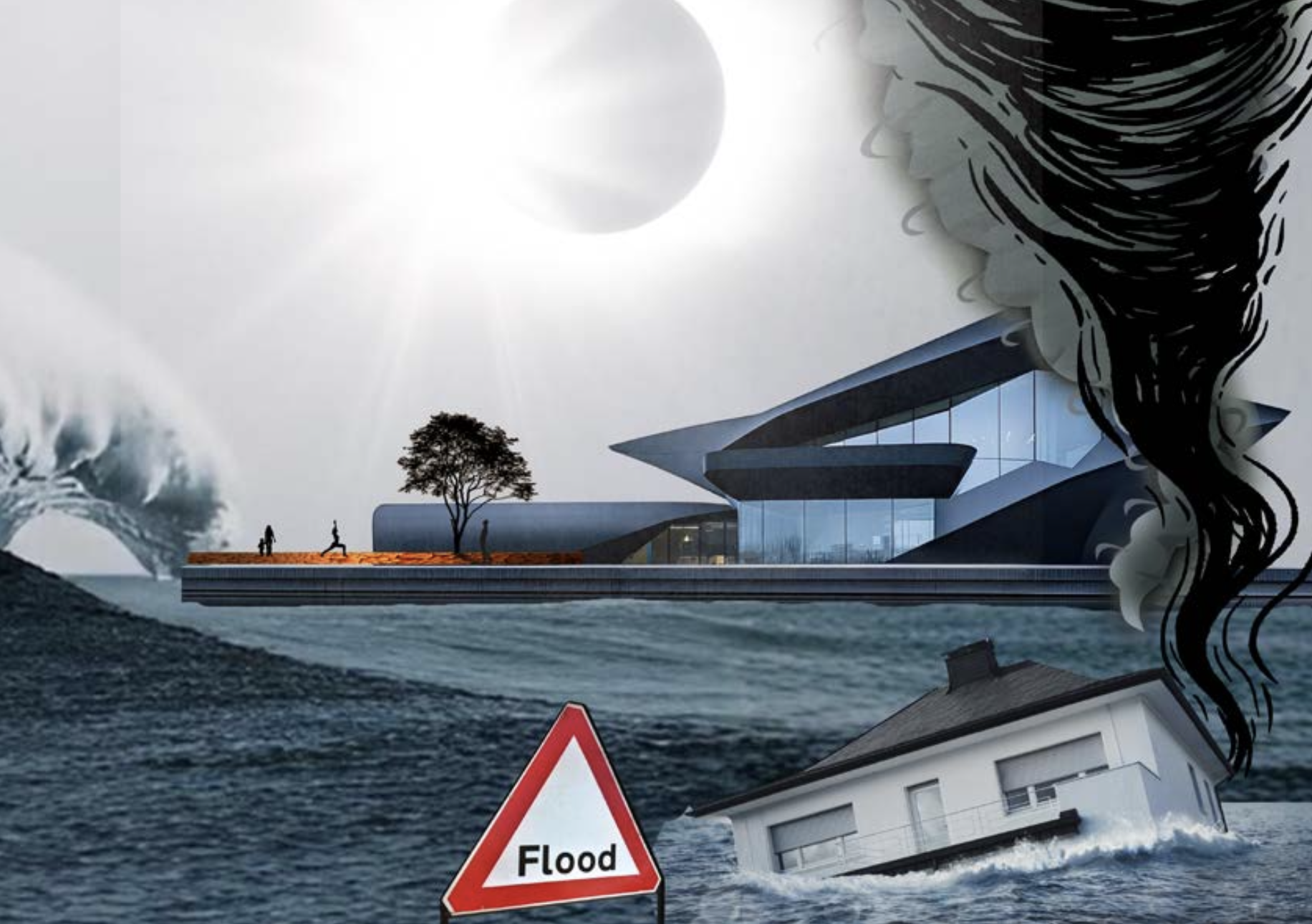
Society is undergoing a clear shift in values: from controlling nature to living with nature. Climate change, rising sea levels and extreme weather conditions are putting traditional forms of housing under increasing pressure. Flooding, disappearing islands and heat problems in newly built neighbourhoods show that static urban planning is becoming less suitable for the future. As a result, the demand for flexible, adaptive and sustainable ways of living is growing. Water, once mainly seen as a threat, is increasingly being viewed as an ally.
One of the first trend signals is the growing risk of climate-related disasters. Flooding is becoming more frequent and affects not only vulnerable areas, but also densely populated regions. This is creating greater awareness that building on fixed land is not always the safest option. At the same time, governments and water authorities are increasingly promoting climate-adaptive construction, requiring new homes to withstand flooding, heat and drought.
A third trend signal is technological innovation within the construction industry. Floating homes, houses built on stilts and even complete floating cities are no longer science fiction, but real projects. These solutions combine sustainability, mobility and safety. Alongside this, people’s housing needs are changing. Residents are not only looking for affordable homes, but also for future-proof living environments where safety and quality of life are central. Housing must be able to adapt to changing conditions.
Another important signal is the renewed interest in collective and circular living. Floating communities often encourage shared facilities, local energy production and efficient use of space. This reflects a broader lifestyle in which sustainability, community and responsible use of natural resources are becoming more important than individual ownership and continuous growth.
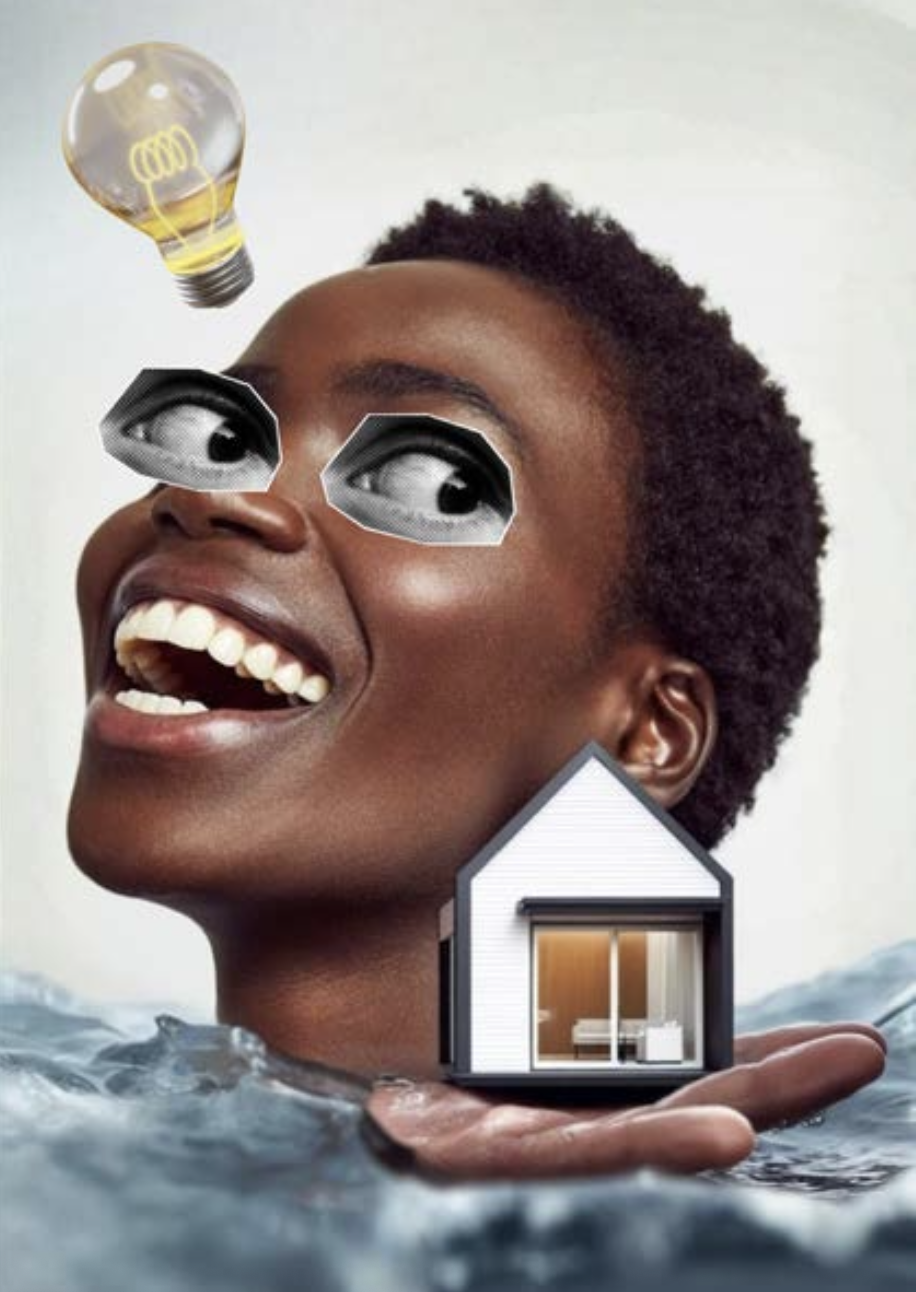
The emerging lifestyle is that of the climate-adaptive water resident: someone who no longer fights against water, but integrates it into the way they live. Floating living represents flexibility, resilience and future-oriented thinking. In a world where land is becoming increasingly scarce and uncertain, living on water is becoming a more realistic and attractive alternative.